XML
Extensible markup language that defines a format that is both human-readable and machine-readable. XML files are used in Joomla for installation files, options, and JForm forms.
Purity III is the best responsive Joomla template that you won't get enough of for almost everything...


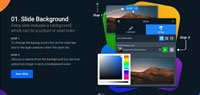
To change the background click on the label bar and in the layer window select the style tab.
Choose a source from the background top tab then upload an image or pick a background color.

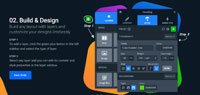
To add a layer, click the green plus button in the left sidebar and select the type of layer.
Select any layer and you can edit its content and style properties in the layer window.





Extensible markup language that defines a format that is both human-readable and machine-readable. XML files are used in Joomla for installation files, options, and JForm forms.
Module chrome is a term for PHP functions that provide some optional HTML markup in which the module code is placed. This is often called a wrapper for the module output.
Module chrome allows template designers to have a certain amount of control over the way the output from a Module is displayed in their template. Essentially, it consists of a small amount of predefined HTML which is inserted before, after, or around the output from each module, and which can then be styled using CSS. Module chrome is commonly used to provide borders around modules, especially with rounded corners, but it can be used for much more than that.
Module chrome is determined by using the 'style' attribute in the statement calling the module. For example, the following statement may be used in the index.php file of a template to insert the Modules in the 'user1' position and apply the 'custom' Module chrome:
<jdoc:include type="modules" name="user1" style="custom" />It can be seen that the same Module chrome is applied to every Module in that position - in other words, if you want to have two Modules in a column, but want them to have different Module chrome, then they would need to be set up as two different 'positions' (e.g. 'user1' and 'user2').
The standard Joomla! 1.5+ package includes six default Module chrome styles. However, the flexibility of the template system means that you are not limited to these styles - it's very easy to create as many new styles as you want!
Reference: http://docs.joomla.org/Glossary
The default access levels for Joomla are: Public (everyone), Registered (logged-in users), or Special (authors and above). However, you can create an infinite number of custom access levels to suit your site’s needs.
An anchor is created using the <a> tag in HTML. An anchor allows you to place a bookmark inside an HTML page. In Joomla!, you can place an anchor inside an article (for example, using the TinyMCE editor). This lets you create a link that will go directly to that point in the article.
The HTML source code for an anchor looks like the following:
<a name="my_anchor" title="My Anchor"></a>You can link to an anchor from within the same page using the HTML code
<a href="#my_anchor" ></a>Clicking that link will take you directly to the location of the anchor tag.
You can link to an anchor in a different page by appending "#" plus the anchor name to the end of the URL. In the example above, if the URL for the article was http://www.mysite.com/my_article.html, then you could link directly to the anchor in that page with the URL http://www.mysite.com/my_article.html#my_anchor.
Access Control List or ACL is according to the Wikipedia definition, “...ACL specifies which users or system processes are granted access to objects, as well as what operations are allowed to be performed on given objects.” In the case of Joomla there are two separate aspects to its Access Control List which site administrators can control:
Which users can gain access to what parts of the website? For example, will a given menu choice be visible for a given user? A registered user can view, but the public at large cannot. Perhaps the menu choice is hidden from all except an Editor user and higher.
What operations (or actions) can a user perform on any given object? For example, can a user listed as an "Editor" submit an article or only edit an existing article. The ACL settings could allow submitting and editing, or allow a change an article's category, add tags or any combination.
The implementation of ACL in Joomla was substantially changed in the Joomla! 2.5 series which allowed for more flexibility in groups and permissions.
Reference: http://docs.joomla.org/Glossary